
Claude Managed Agents and the Helmfast Thesis: Why Sovereign Deployment Matters
Originally published on corewrk.com.
Anthropic’s launch of Claude Managed Agents validates the market for agent orchestration platforms—and draws a clear line around what they’re optimizing for. For regulated companies that can’t route operational data through a third-party managed service, the gap is structural. Here’s what we’re building to close it.
Product direction update — October 30, 2026: This dated article reflects earlier positioning. Helmfast now leads with governed setup for human and agent teams, with Build, Deploy, and Govern as the long-term platform direction. Earlier deployment scope and timelines are historical, not current release commitments. See the current platform direction.
On April 8th, Anthropic launched Claude Managed Agents—a cloud-hosted platform for building and deploying AI agents at scale. It’s a credible product with real early traction. Notion, Rakuten, Asana, and Sentry are already shipping with it. The pitch is clean: go from prototype to production in days instead of months, with all the infrastructure abstraction you need.
We think it’s excellent work. And it’s also exactly the confirmation we needed.
What Claude Managed Agents Got Right
Claude Managed Agents solves a real problem. Before this, deploying a production AI agent meant months of infrastructure work—sandboxed execution, state management, credential handling, permission scoping, observability, error recovery. Most teams aren’t equipped for that. Anthropic removing that burden is a genuine advancement.
The product is also well-architected. It pairs Claude’s agent harness with enterprise-grade cloud infrastructure. You define your agent logic, your tools, your guardrails. Anthropic handles orchestration, context management, and scaling. Early users report 10x faster time-to-production. That’s not marketing noise—that’s the delta between a prototype running on a laptop and something your team can rely on.
The timing is also deliberate. Claude Code adoption has crossed an inflection point. Seventy-three percent of developers now use AI coding tools daily (up from 41% last year, 18% the year before). The persona building useful automations with Claude—technically capable but not a DevOps engineer—has become large enough to matter. Anthropic is right to build for this moment.
The Gaps We’re Solving For
But Claude Managed Agents operates under a set of constraints that work for some companies and create friction for others. This is a structural wall for technical founders and operations leaders in regulated verticals—healthtech, fintech, govtech, legal tech, insurance tech—and the frustration is growing.
They have a problem Claude Managed Agents doesn’t solve.
These companies have existing cloud infrastructure. Most have AWS Activate credits or Google for Startups credits sitting on their accounts—thousands of dollars in committed spend they’re already paying for. They have established data residency requirements, often regional, sometimes contractual. They have compliance frameworks (HIPAA, SOC 2, FedRAMP, GDPR) that are non-negotiable. They have security posture audits that require visibility into exactly what’s happening with their data, their code, and their agent execution.
And they need to run AI agents on their own infrastructure, not Anthropic’s.
This isn’t a niche. This constraint shows up repeatedly for technical founders in regulated spaces. They love Claude. They want to use Claude Code and Claude Managed Agents’ design philosophy. But they cannot route their operational data, their customer data, or their internal workflows through a third-party managed service—no matter how trustworthy Anthropic is.
The wall they hit isn’t technical. It’s structural. Anthropic built for enterprises with flexible procurement and cloud-agnostic architecture. They built for companies that value speed and abstraction over control and sovereignty.
The companies we’re talking to need the opposite.
What We’re Building
Helmfast is built so the wall does not have to block you. Your data residency requirements stay intact. Your compliance audit clears on the same architecture that runs your production systems. Your stranded AWS or GCP credits fund the infrastructure instead of a new line item on the P&L. And you still get the agent orchestration, infrastructure abstraction, and operational simplicity that make Claude Managed Agents compelling.
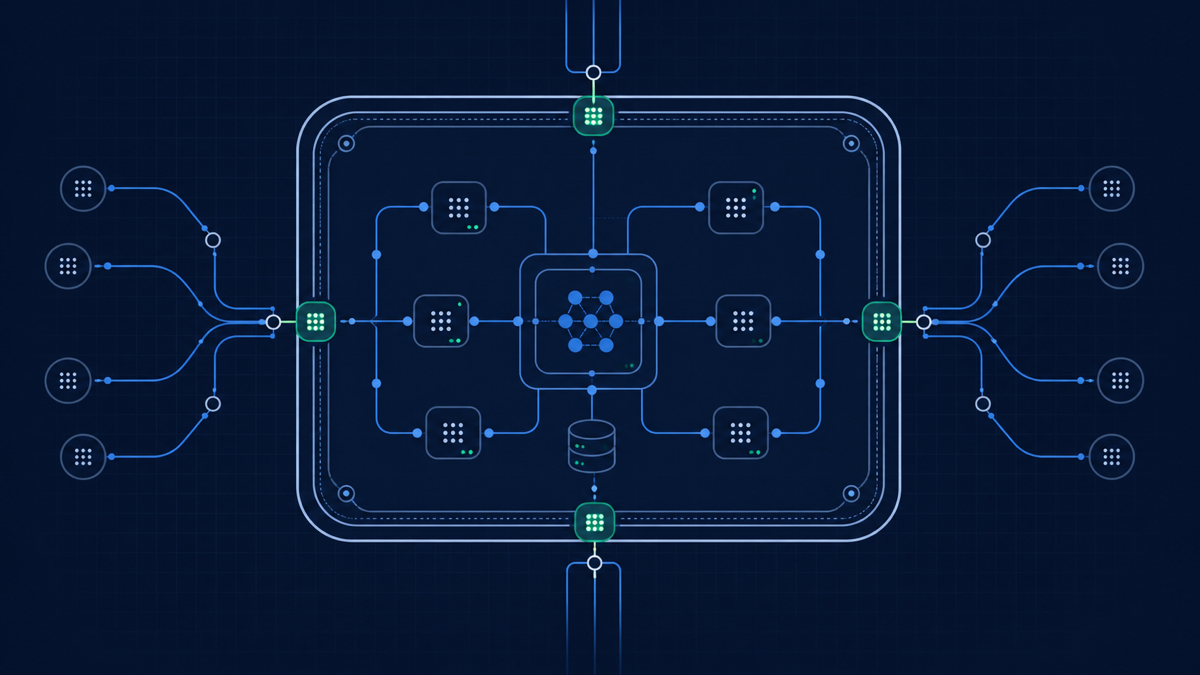
The mechanics are simple. You point Helmfast at your GitHub repo or your local Claude Code project. We containerize it, provision it on your AWS or GCP account, and give you the observability and orchestration to run it persistently and at scale. You own the compute. You own the data residency. You own the compliance posture.
The experience is similar to Claude Managed Agents: define your agent, define your tools, define your guardrails, and let the platform handle the orchestration. The difference is that the infrastructure runs in your account, under your control, with your security and compliance frameworks intact.
This matters because it unlocks a cohort of founders who are currently blocked. They can’t use Anthropic’s managed service. They shouldn’t have to fork Claude Code and build custom infrastructure. They need something in between—a platform designed for sovereignty.
Who This Is For
Helmfast is built for a specific kind of team. If any of these sound familiar, you’re probably in the right place:
- Technical founders at regulated SMBs who have built real workflows with Claude Code and hit the deployment wall—where the agent works, but the compliance story doesn’t.
- Operations leaders at 5–100 person startups who know their team could move faster with AI agents, but only if those agents run on infrastructure they control.
- Companies with stranded cloud credits who have infrastructure budget that could fund AI-driven automation, but can’t justify another SaaS subscription on top of it.
- Teams in compliance-sensitive verticals—healthtech, fintech, govtech, legal tech, insurance tech, EU-facing SaaS—where data sovereignty and audit trails aren’t optional.
If you’re building in this space and want to follow along or get involved, we’d like to hear from you.
The Conviction
Anthropic’s launch validates our thesis in a way we couldn’t manufacture ourselves. They’ve proven the market wants agent orchestration platforms. They’ve shown enterprises will adopt at speed. And they’ve drawn a clear line around what they’re optimizing for—managed convenience for enterprises with cloud flexibility.
We’re optimizing for something different: sovereignty, compliance, and the reallocation of existing cloud spend. These aren’t edge cases. They’re structural constraints for an entire cohort of founders building with Claude.
The market for AI agent deployment is going to be large. But it’s not going to be monolithic. Anthropic is right for some companies. Helmfast is built for others.
If you’re in the “others” category, let’s talk.
Ready to deploy AI agents on your own infrastructure? Helmfast is purpose-built for regulated companies that need sovereignty, compliance, and control. Start a conversation about your deployment.